Why your right chest might hurt
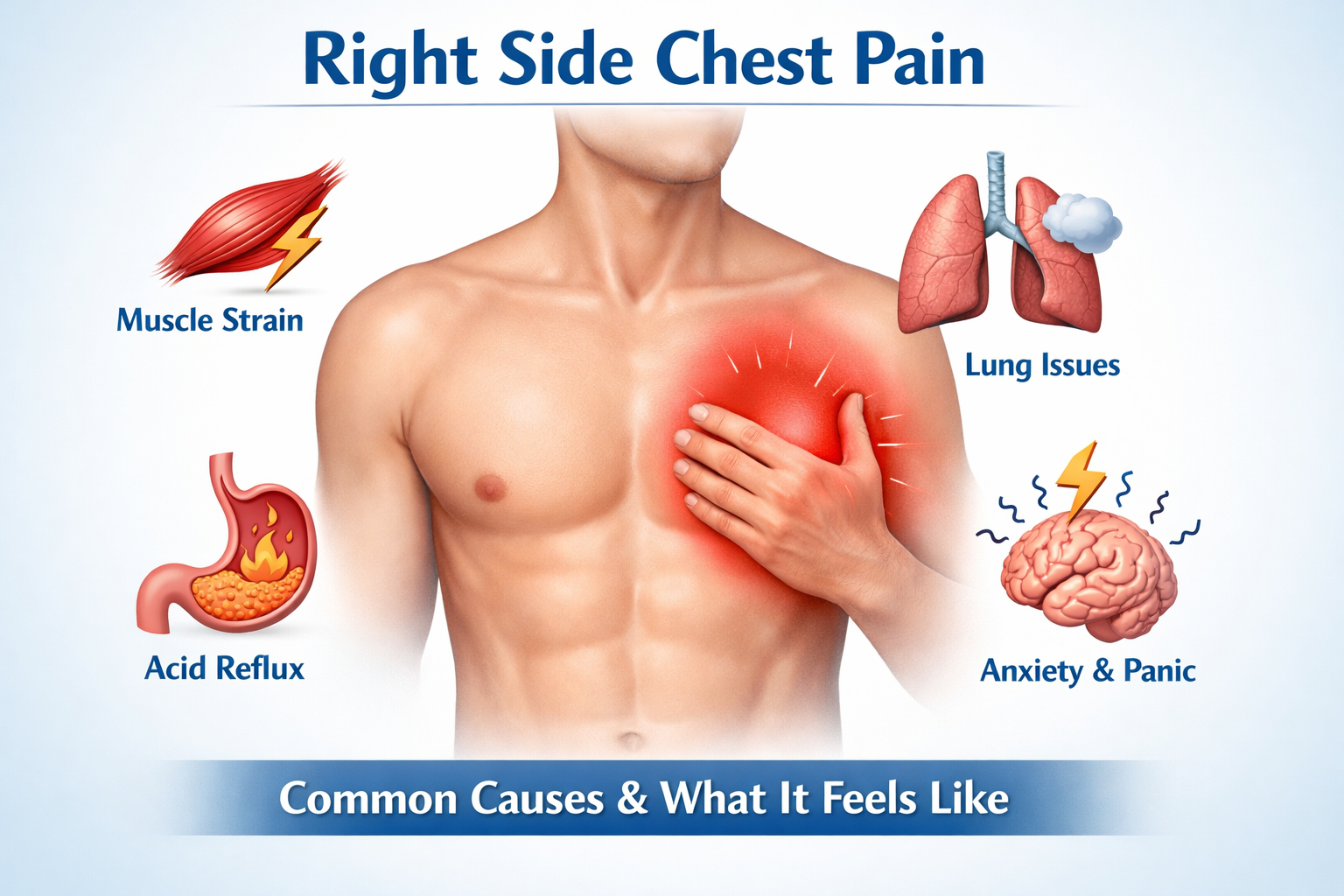
Pain on the right side of your chest can start in the lungs, muscles, bones, nerves, or digestive system. Many of these issues also make it harder to breathe deeply.
Lung and breathing-related causes
Pulmonary embolism (PE)
A blood clot that travels to a lung artery can cause sudden, sharp pain that intensifies when you inhale. Other signs include shortness of breath and a racing heartbeat.
Chronic obstructive pulmonary disease (COPD)
Damage to the air sacs and airway lining makes breathing difficult. You may notice chest tightness, wheezing, and breathlessness.
Pneumonia
A lung infection can trigger chest discomfort along with fever, chills, and a cough that produces mucus.
Pleurisy (pleuritis)
Inflammation or infection of the membrane around the lungs causes sharp pain that worsens with deep breaths or coughing. The pain can also spread to the shoulder.
Pneumothorax (collapsed lung)
Air leaking between the layers covering the lung can cause part or all of the lung to collapse. This often brings sudden, stabbing pain in the chest, and sometimes the neck or shoulder.
Pulmonary hypertension
High blood pressure in the lung arteries makes the heart work harder to push blood through, leading to chest pain and shortness of breath.
Asthma
Allergens or irritants narrow the airways, causing wheezing, coughing, and a feeling of tightness in the chest.
Lung cancer
Chest pain linked to lung cancer may get worse with coughing, laughing, or taking a deep breath.
Muscle and bone causes
Broken rib
A rib fracture from an injury can produce severe pain, especially with deep breaths. Discomfort can linger for weeks as the bone heals.
Chest muscle strain
Overuse or injury can tear chest muscles, leading to pain that flares with movement. Swelling and bruising may also appear.
Nerve and skin cause
Shingles
The chickenpox virus can reactivate later in life, most often after age 50, causing a painful, band-like rash on one side of the chest.
Digestive cause
Gallstones
Cholesterol-based stones can block the flow of bile, inflaming the gallbladder. This can trigger intense pain beneath the right rib cage that can last for hours.